The scientific papers, available research data and other publications are available at the ZENODO page of the PlantsIMS project: https://www.zenodo.org/search?page=1&size=20&q=ilbeigi .
Since most of the plant hormones are not volatile and have high boiling points, in the first step a high temperature injection port system was designed and constructed to bring the samples into gas phase (Figure 1). The injection port operates in temperature range of 25-260o Performance the injection port was assessed for both vaporization and transporting the samples into the ionization region of the ion mobility spectrometry (IMS). It was successfully tested for measurements of the non-volatile plant hormones including auxin, salicylic acid.
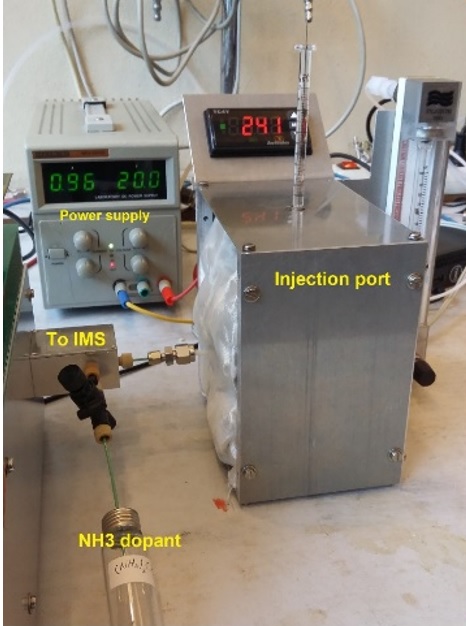
Figure 1. Photos of the constructed high temperature injection port.
- In this work, an IMS-based method was developed to exploit the advantages of SMPE, MCC and IMS for fast and sensitive analysis of real samples in complex matrix. The SPME-MCC-IMS method was employed for quantitative analysis of MeSA in tomato leaves.
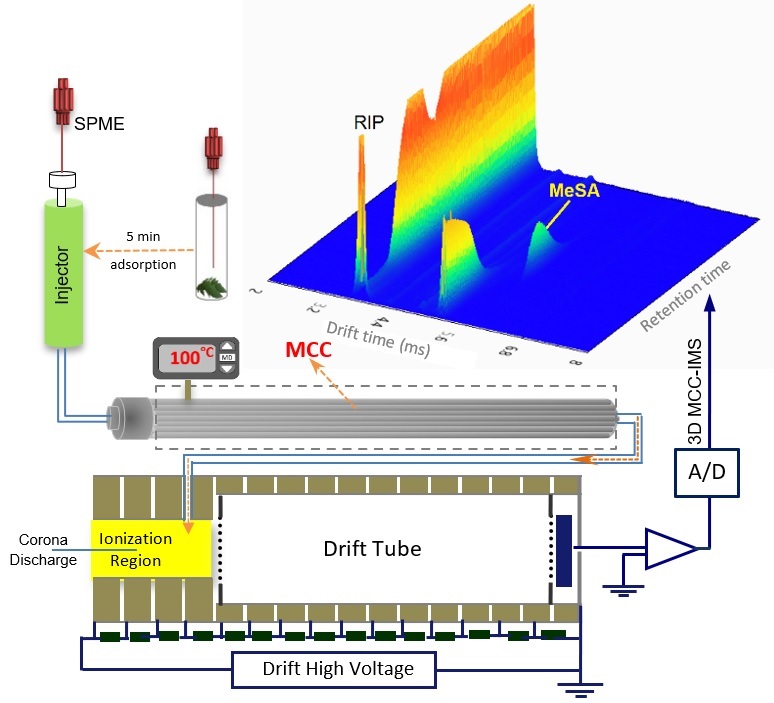
Figure 2. Schematic presentation of the experimental set-up (SPME-MCC-IMS).
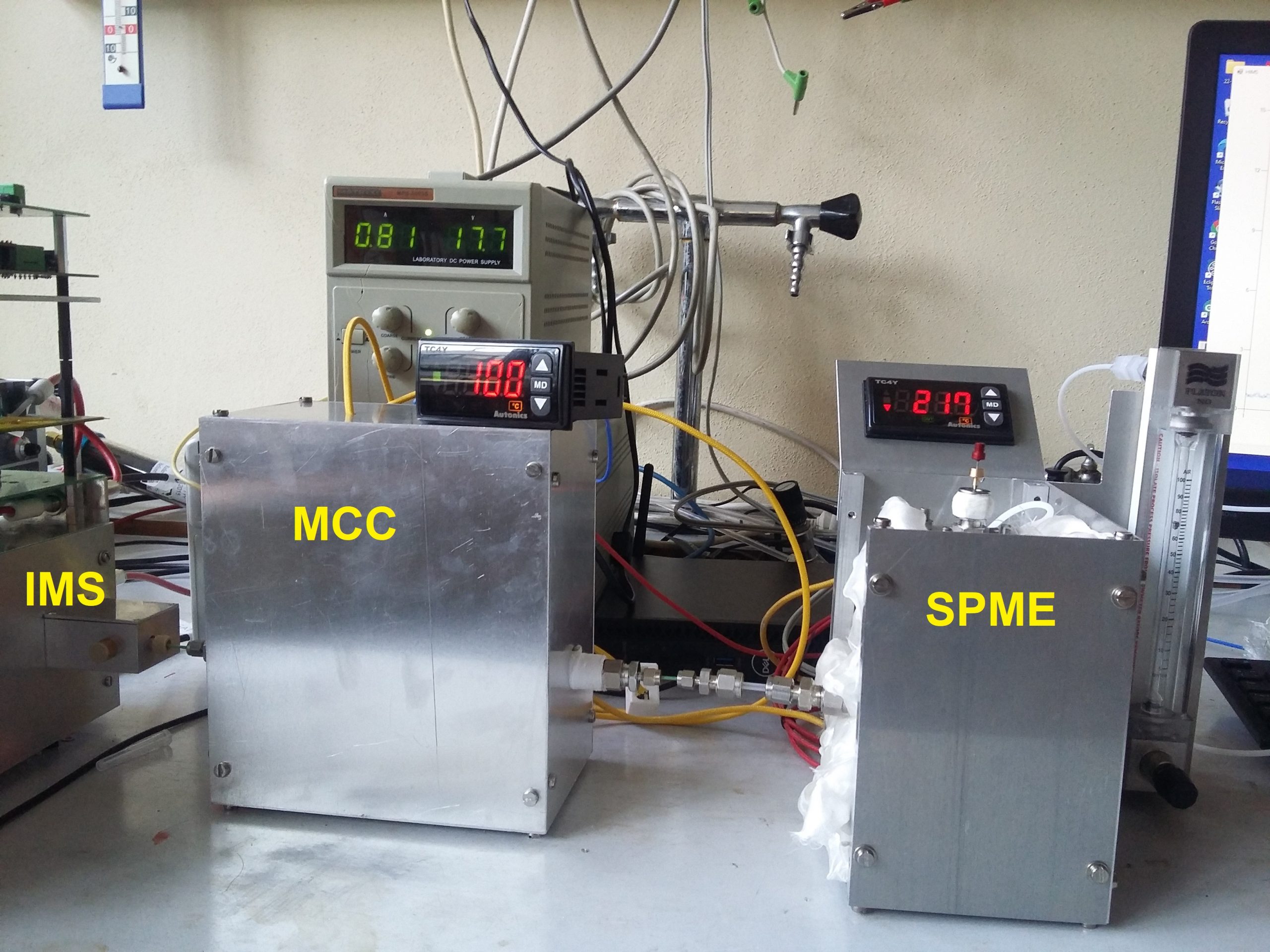
Figure 3. Photo of coupling SPME-MCC-IMS.
-
Detection of auxin plant hormones by ion mobility-mass spectrometry
https://link.springer.com/article/10.1007/s00216-022-04198-x
https://www.zenodo.org/record/7981083
Ion mobility spectrometry (IMS) equipped with a corona discharge (CD) ion source was used for measurement of three auxin plant hormones including indole-3-acetic acid (IAA), indole-3-propionic acid (IPA), and indole-3-butyric acid (IBA). The measurements were performed in both positive and negative polarities of the CD ion source. Dopant gases NH3, CCl4, and CHBr3were used to modify the ionization mechanism. A time-of-flight mass spectrometer (TOFMS) orthogonal to the IMS cell was used for identification of the product ions. Density functional theory was used to rationalize formation of the ions, theoretically. The mixtures of the auxins were analysed by CD-IMS. The separation performance depended on the ion polarity and the dopants. In the positive polarity without dopants, auxins were ionized via protonation and three distinguished peaks were observed.Application of NH3dopant resulted in two ionization channels,protonation and NH4+ attachment leading to peak overlapping. In the negative polarity two ionization reactions were operative, via deprotonation and O2– attachment.The separation of the monomer peaks was not achieved while the peaks of anionic dimers [2M-H]– were separated well. The best LOD (4 ng) was obtained in negative polarity with CCl4dopant.Methylation (esterification) of IAA improved LODs by about one order.
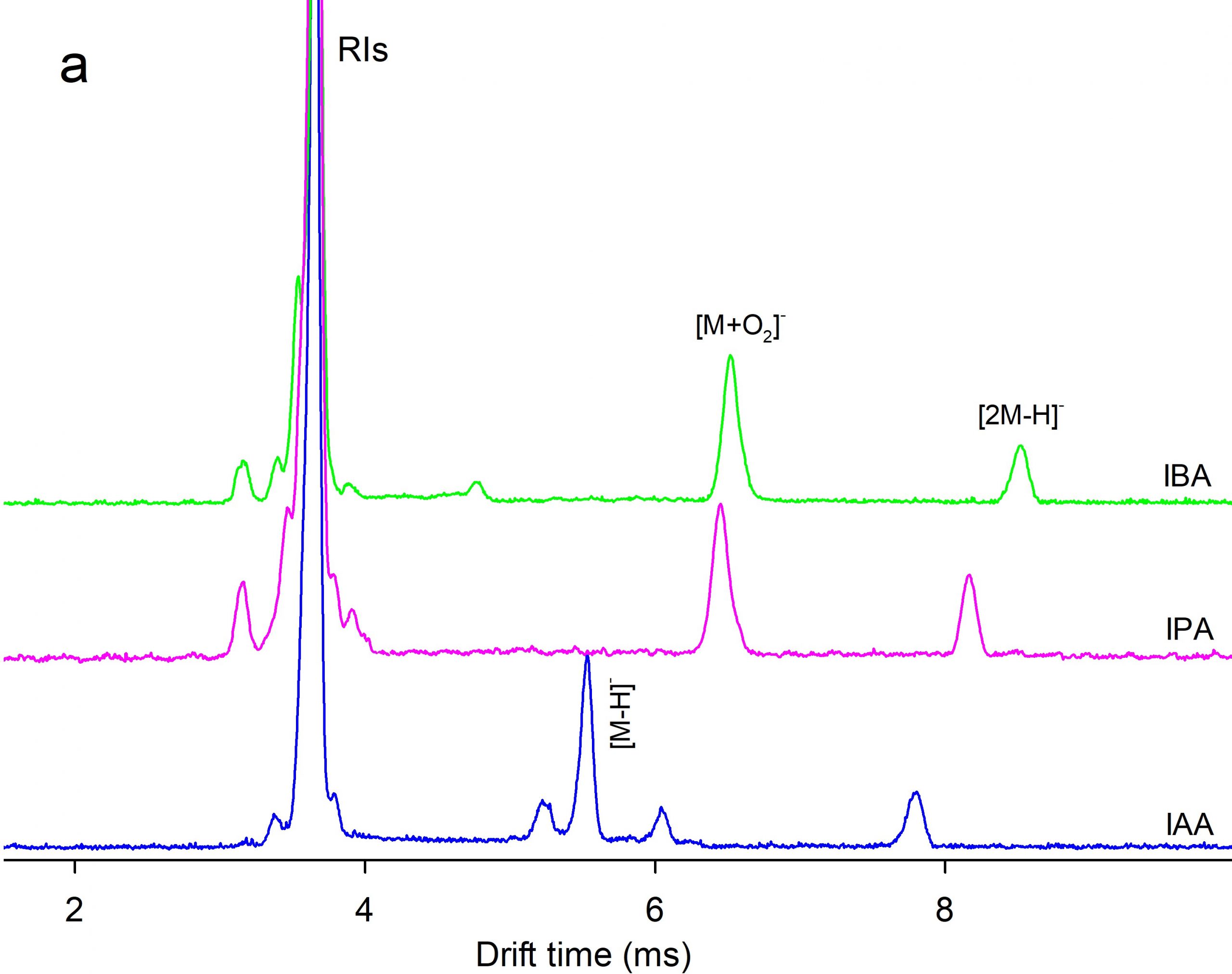
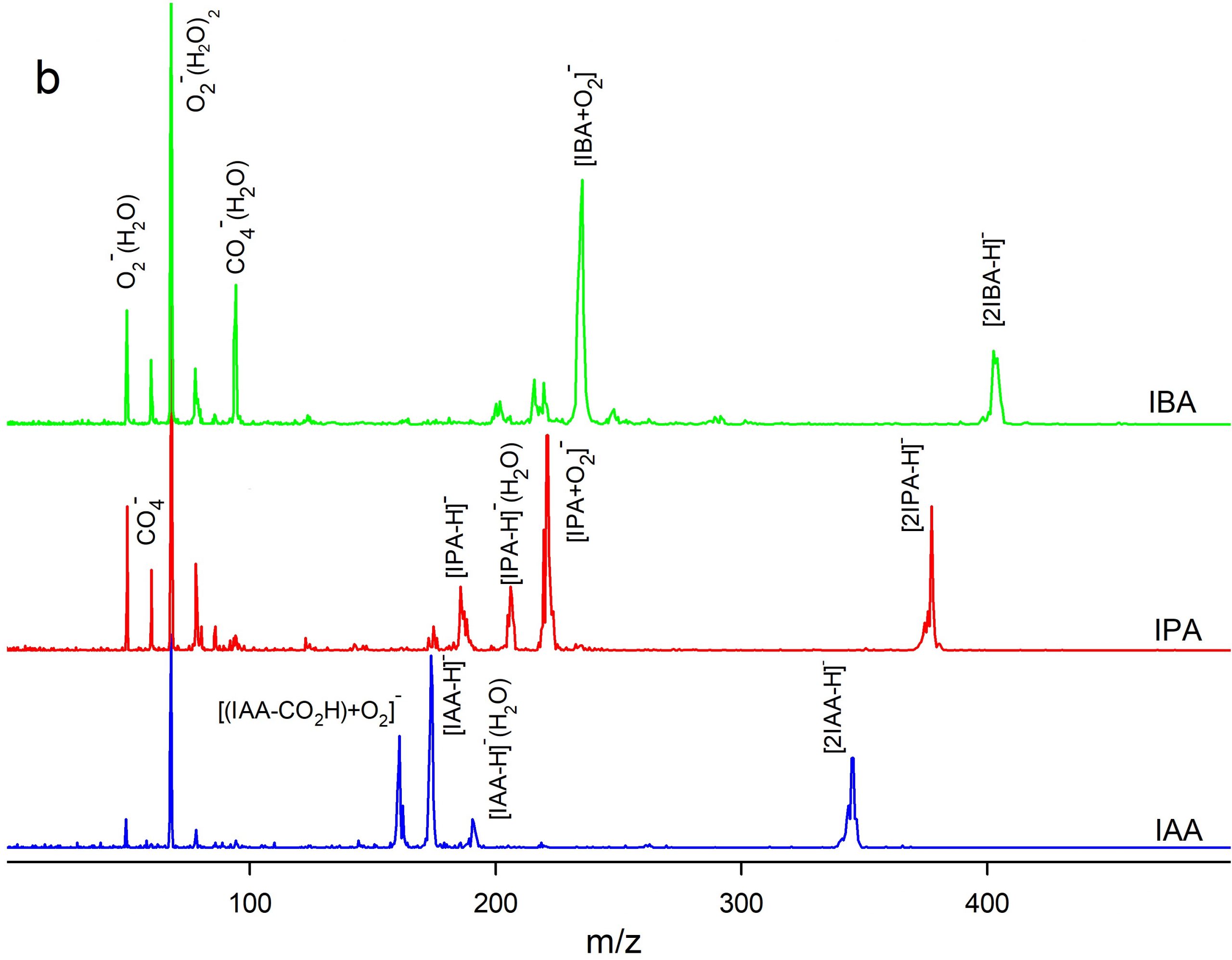
Figure 4. Comparison of (a) ion mobility and (b) mass spectra of IAA, IPA, and IBA in the negative mode of CD ion source.
-
Detection of Methyl Salicylate in Tomato Leaves
https://pubs.acs.org/doi/pdf/10.1021/acs.jafc.2c05570
https://www.zenodo.org/record/7981306
Methyl salicylate (MeSA) is a plant-signaling molecule that plays an essential role in the regulation of the plant responses to biotic and abiotic pathogens. In this work, solid phase microextraction (SPME) and multi-capillary column (MCC) are coupled to ion mobility spectrometer (IMS) to detect MeSA in tomato leaves. The SPME-MCC-IMS method provides two-dimensional (2D) separation by both MCC and IMS, based on the retention and drift times. The effect of the IMS polarity on the separation efficiency of MCCs was also investigated. In the positive polarity, ionization of MeSA resulted in ([MeSA+H]+) while in the negative deprotonated ions ([MeSA-H]–) and O2– adduct ion ([MeSA+O2]– were formed. In the real sample analysis, the negative polarity operation resulted in the suppression of many matrix molecules and thus in the reduction of interferences. Four different SPME fibers were used for head space analysis and four MCC columns were investigated. In the negative polarity, complete separation was achieved for all the MCCs columns. The limits of detection (LODs) of 15 and 22 ppb (v/v) were achieved for the direct injection of head space of MeSA in positive and negative polarities, indicating high sensitivity of IMS toward MeSA. Limits of detection (LOD) of 0.1 µg g-1 and linear range of 0.25-14 µg g-1 were obtained for measurement of MeSA by the SPME-MCC-IMS method with 5 min extraction time. The MeSA content of fresh tomato leaves were determined as 1.5-9.8 µg g-1, 24-96 h after inoculation by tomato mosaic virus (ToRSV).
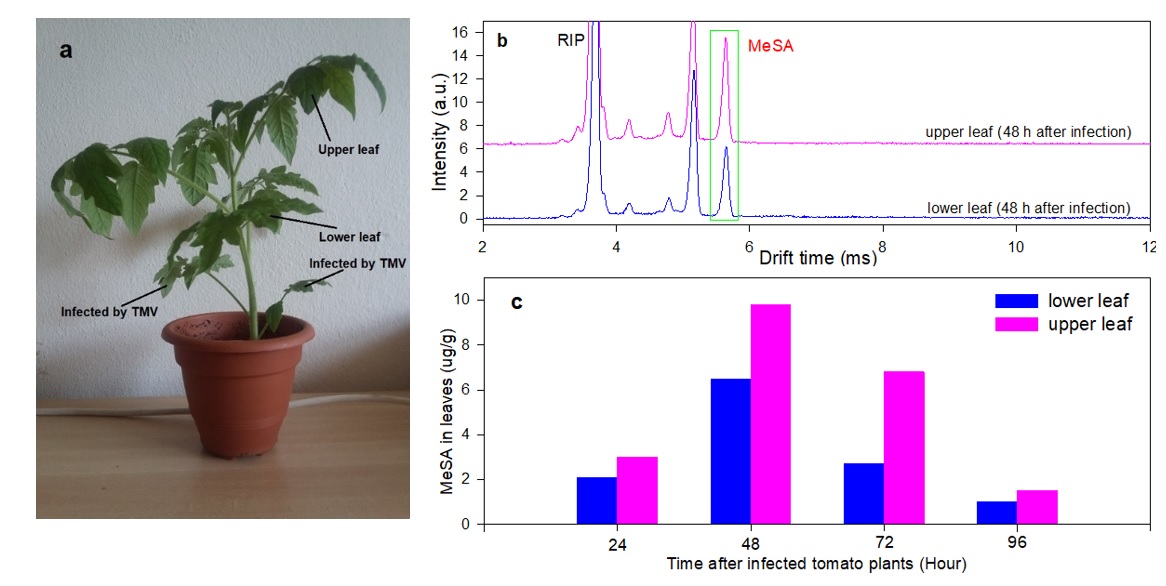
Figure 5. (a) The ToRSV inoculated, lower and upper leaves in a typical tomato plant. (b) The MCC-separated IMS spectra obtained 48 h after inoculation by ToRSV. (c) The measured MeSA content of upper and lower leaves 24 to 96 hours after inoculation.
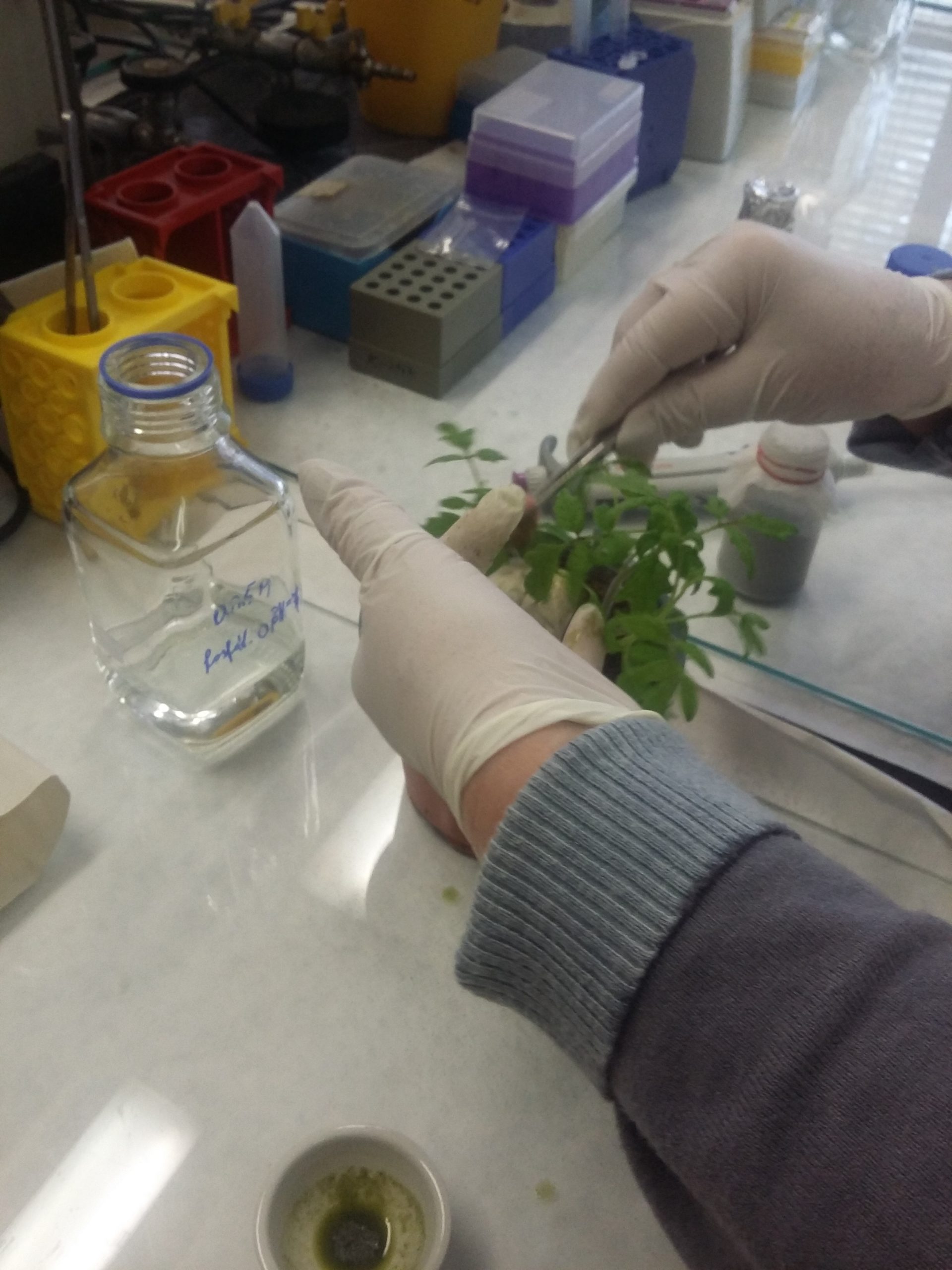
The following link shows inoculation of the lower leaves of the tomato plants with an age of 5 weeks by tomato ringspot virus (ToRSV)
https://www.zenodo.org/record/7981460
-
Introduction of formic acid as a dopant for analysis of plant hormones
https://doi.org/10.1021/jasms.3c00225
In this work, we introduce formic acid (FA) as a potent dopant for APCI ionization in the negative polarity, which can be applied to IMS and MS techniques. To assess the efficiency of this dopant, ionization of several analytes including plant hormones, drugs, explosives, and pesticides was investigated with and without FA dopant. This work was published in the Journal of the American Society for Mass Spectrometry in 2023.
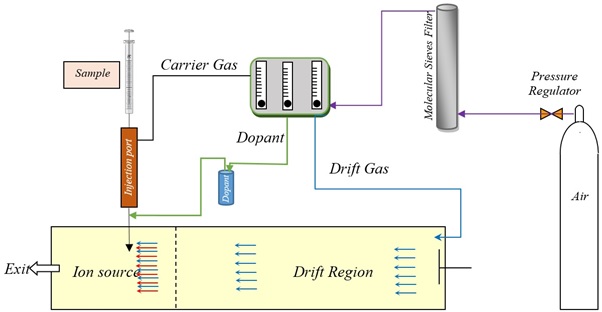
Figure 6. Schematic representation of the experimental setup and the gas flow paths.
-
Measurement of cytokinins in coconut juice by LC-IM-QTOF
Cytokinins play various important functions in cell division, chlorophyll formation, stimulating differentia tion of plant tissues, seed germination, bud formation, release of buds from apical dominance, leaf expansion, and reproductive development.
Cytokinins are in very low concentrations in plants. To overcome this limitation, solid-phase extraction (SPE) is used as a pre-concentration and purification method.
In this project, three cytokinins including zeatin, kinetin, 6-Benzylaminopurine (BAP) were measured in coconut juice in collaboration with BOKU university in Vienna. An Agilent 6560 LC-IM-QTOF mass spectrometer was used for all measurements. A Dual Jetstream electrospray ion source (ESI) was used for ionisation of the compounds.
-
In-site measurement of methyl salicylate in tomato
Plants release some volatiles compounds and plant hormones when they are exposed to different pathogens and mechanical damages. In this project, the released plant hormones from blubbery and tomato were studied and analyzed. To monitor the released plant hormones, a device with different components for collecting the chemicals was designed and constructed. The designed device includes a Teflon base with a hole in center to put the plant into it (Figure 7a and b) and a glass cylinder (2L) which is sealed around the plant to avoid leakage of the emitted chemicals (Figure 8c). A stream of zero air with flow rate of 700 ml was used to sweep up the emitted volatiles and pass them through the outlet in the top of the glass cylinder. The outlet of the glass cylinder was equipped with a Tenax adsorbent (Figure 8d) to collected the exited volatile compounds.
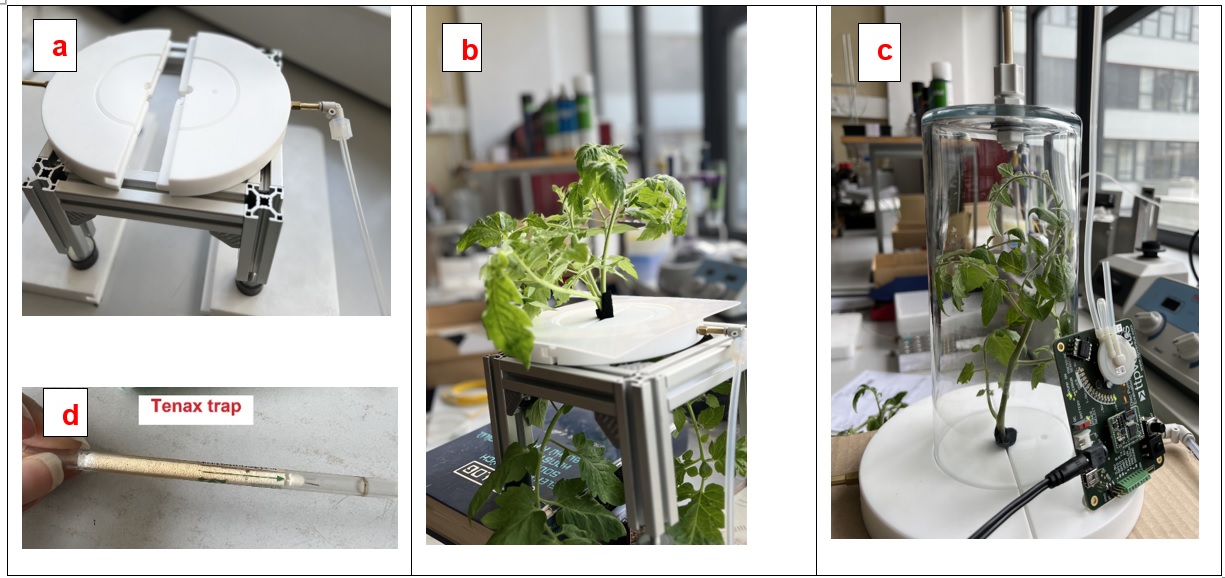
Figure 7. Experimental setup for collecting the emitted volatile chemicals and plant hormones from tomato plant including (a) a Teflon guillotine-like base, (b) an aluminum stool, (c) glass cylinder and pump, and (d) the Tenax trap as an adsorbent.
-
In-site analysis of VOCs emitted from blueberry leaves
We developed a novel, rapid analytical method for detecting volatile organic compounds (VOCs) especially green leaf volatiles (GLVs) emitted from blueberry leaves. Experimental setup for collecting the emitted VOCs from blueberry leaves is shown in figure 8. As shown in Figure 1, a Tenax® trap (Figure 8b) was connected to the outlet of the glass cylinder and used to collect the exhaled VOCs.
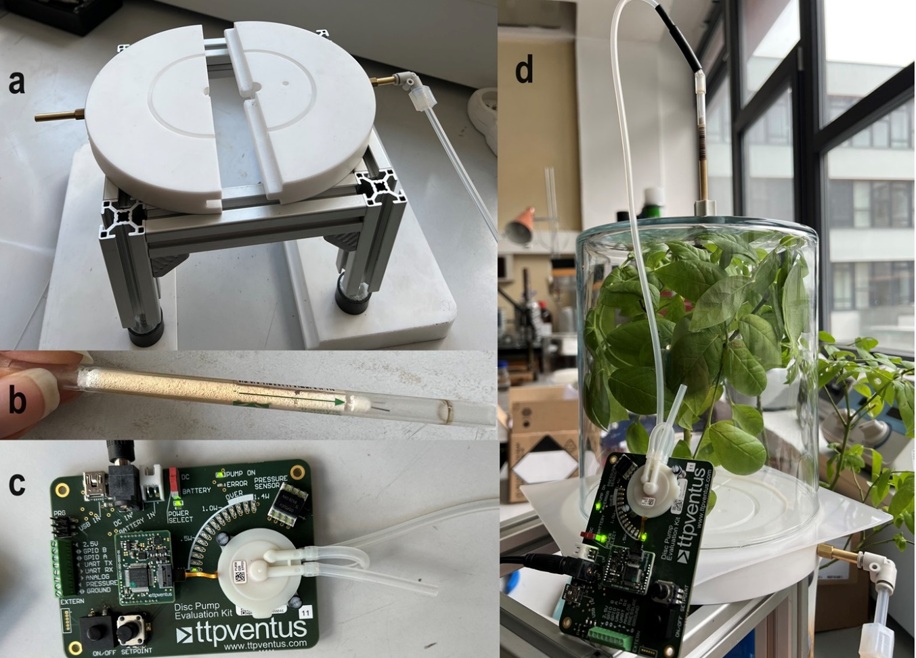
Figure 8. Experimental setup for collecting the emitted VOCs from blueberry leaves including (a) a Teflon guillotine-like base, (b) Tenax trap as an adsorbent, (c) a small pump and (d) the final assembled setup including a glass cylinder and a blueberry branch in it.
The desorption of adsorbed compounds from the Tenax trap was achieved using a thermal desorption system at 230 °C and pre-separated in the multicapillary column (MCC) at an air flow rate of 70 ml min−1 and IMS was used as the detector (Figure 9).
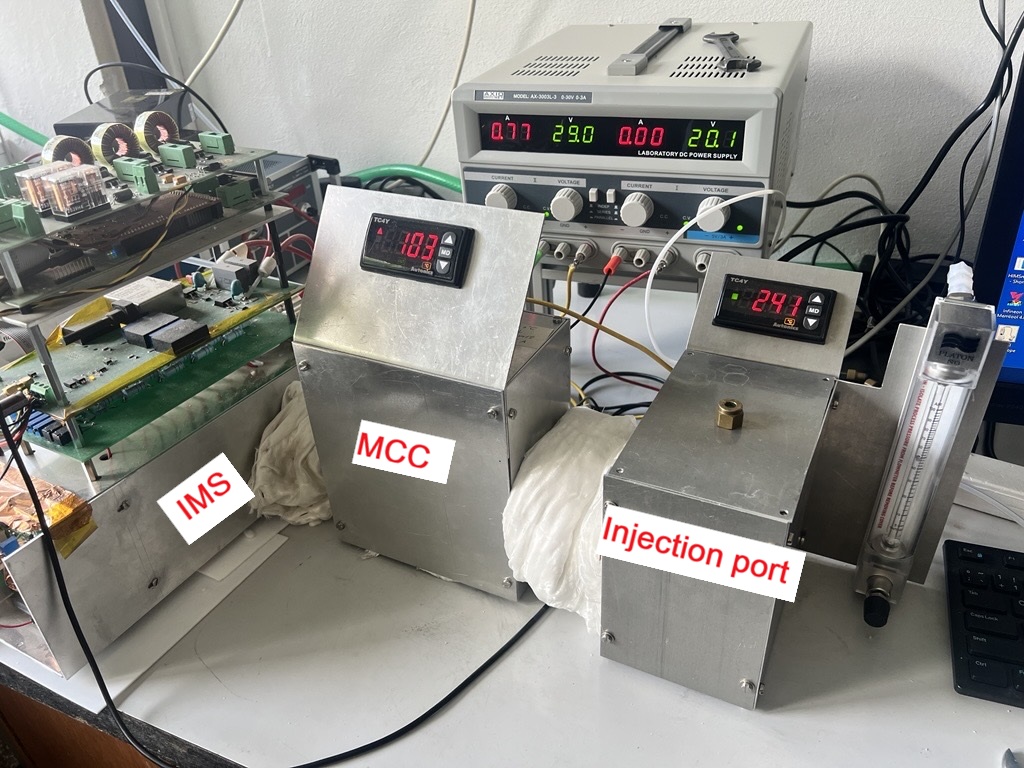
Figure 9. Experimental set up for detection of VOCs by Tenax-MCC-IMS. The VOCs are desorbed from the Tenax surface at 230 °C and entered a MCC column with temperature of 110 °C via a flow of air with flow rate of 70 ml/min. Then, the separated VOCs are entered into the IMS.
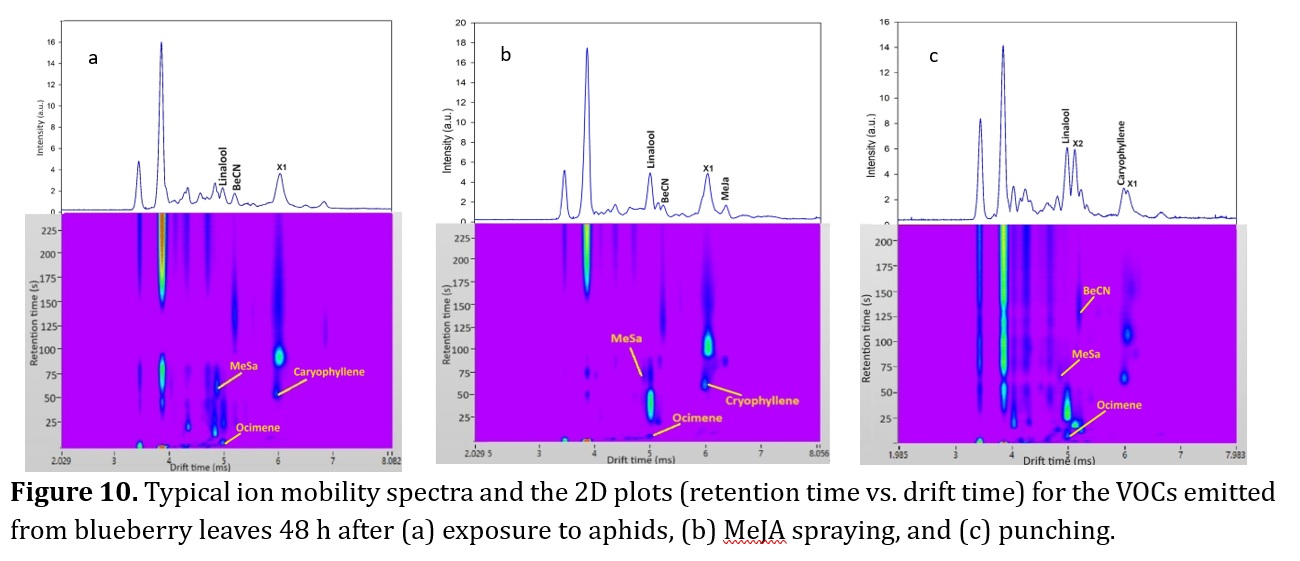
The present study was focused on the detections of caryophyllene, benzene acetonitrile (BeCN), linalool, ocimene, methyl salicylate (MeSA) and γ-cadinene, which are the most abundant VOCs emitted from blueberry leaves. The VOCs are collected and analysed using the Tenax-MCC-IMS method 48 hours after exposing blueberry plants to different stress factors, including mechanical damage (punching), aphid infestation, and methyl jasmonate (MeJA) spraying. Different stress factors resulted in the release of different VOCs with different intensities. In the case of aphids (Fig. 10a), higher levels of MeSA and BeCN and lower intensities of linalool and caryophyllene were detected. The treatment by MeJA, and mechanical damage (punching) resulted in a low level of MeSA. Application of MeJA produced a high amount of linalool and induced considerable amount of caryophyllene and BeCN (Fig. 10b). In mechanical damage (punching) higher concentrations of ocimene, linalool and caryophyllene were detected compared to other stress factors (Fig. 10c). MeJA was observed only for samples treated by this compound (Figure 10c).
Limits of Detection (LODs) for the VOCs were determined in the range of 8 to 33 ng. This new cost-efficient method provided a simple and direct detection of the emitted VOCs from plants without any sample pre-treatment. As there are different (commercial) portable IMS instruments, we hope that this method can be modified further for in-site measurements in green-houses and farms. This work was published in Analytical Methods journal, 2025.
-
Ionization and detection of alkanes by IMS
https://doi.org/10.1021/jasms.6c00175
https://doi.org/10.1002/ppap.70130
Alkanes represent an important class of VOCs, but they are not readily ionized using conventional corona discharge (CD) ion sources in IMS. To address this, we designed and constructed an external CD system to convert alkanes into ketones, which are more efficiently ionized and produce stronger signals in IMS. A schematic view of the entire experimental setup including the external Corona Discharge Reactor (CDR) for transformation of alkanes is shown in figure 11. In the absence of plasma treatment (CDR off), no significant alkane-related ion signals were detected for any of the tested alkanes (Figure 5, bottom spectrum). This lack of signal is attributed to their relatively low proton affinities (PAs), which hinder ionization under standard APCI conditions. After pre-treatment with CDR, several new peaks appear in the spectra (pink spectra in Figure 12), corresponding to neutral products generated from alkanes during the CDR process. Figures 12 presents the positive-polarity IMS spectra for pentane, under CDR-off and CDR-on conditions. This work was published in Plasma Sources Science and Technology in 2026.
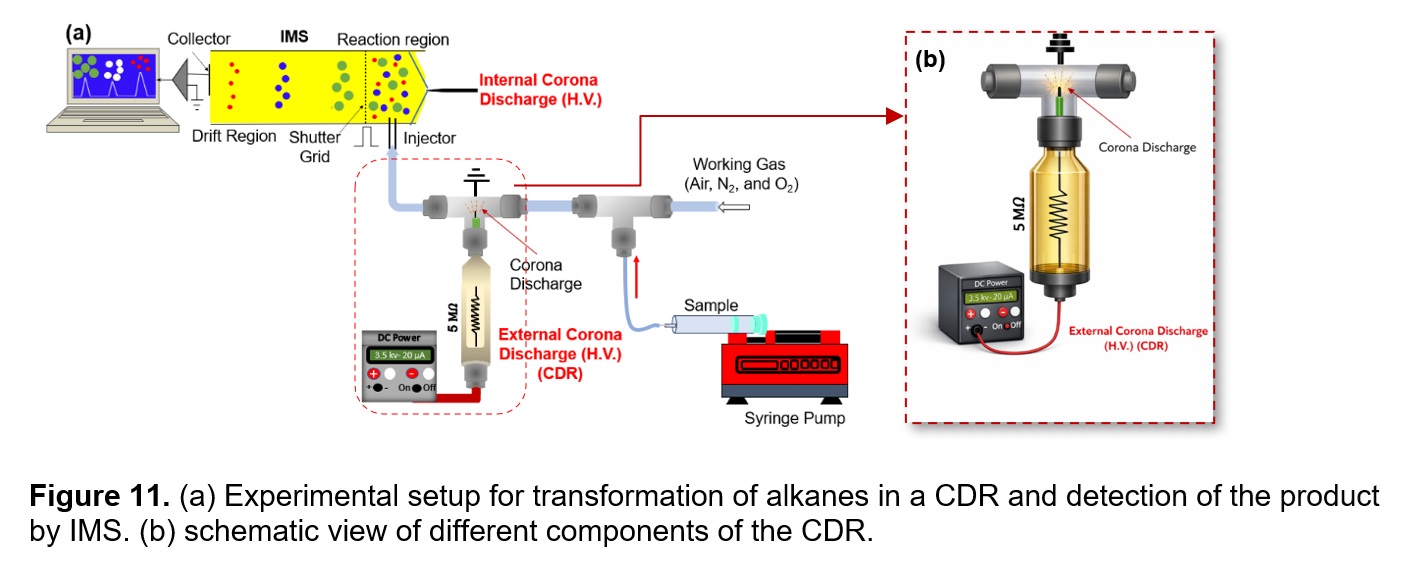
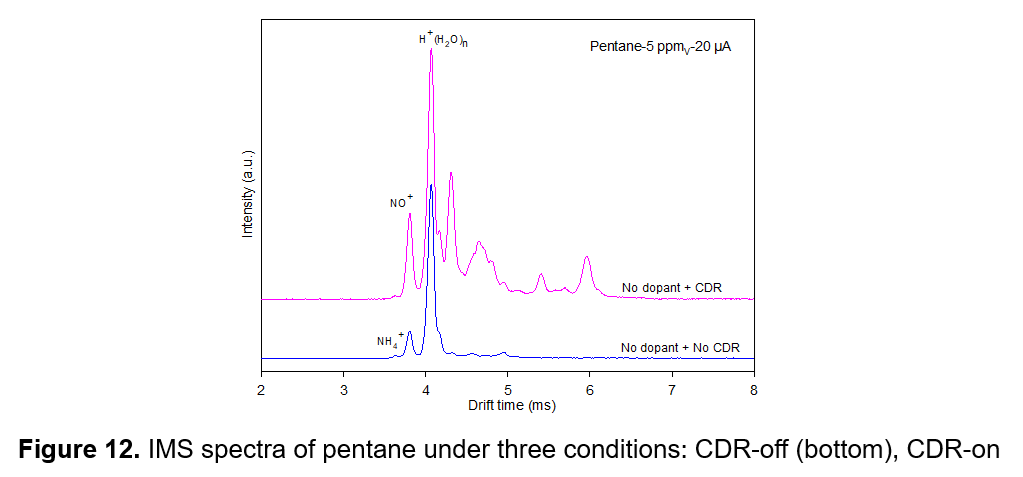
Under standard CD APCI conditions, the IMS spectra were complex due to hydronium-based RI (H+(H2O)n), which favour protonation pathways. To overcome this, we introduced NH3 as a dopant gas to modify the ionization mechanism toward ammonium attachment from NH4+(H2O)n RI. This modification suppressed low-proton-affinity VOCs, reduced chemical noise, and clarified alkane signals, significantly improving spectral interpretability and analytical sensitivity. This simplified the IMS spectra to a single peak, enhanced sensitivity, and improved suitability for analytical applications. This work was published in the Journal of the American Society for Mass Spectrometry in 2026.
-
Detection of methanol in both the gas phase and solution
https://doi.org/10.1021/acs.analchem.5c03428
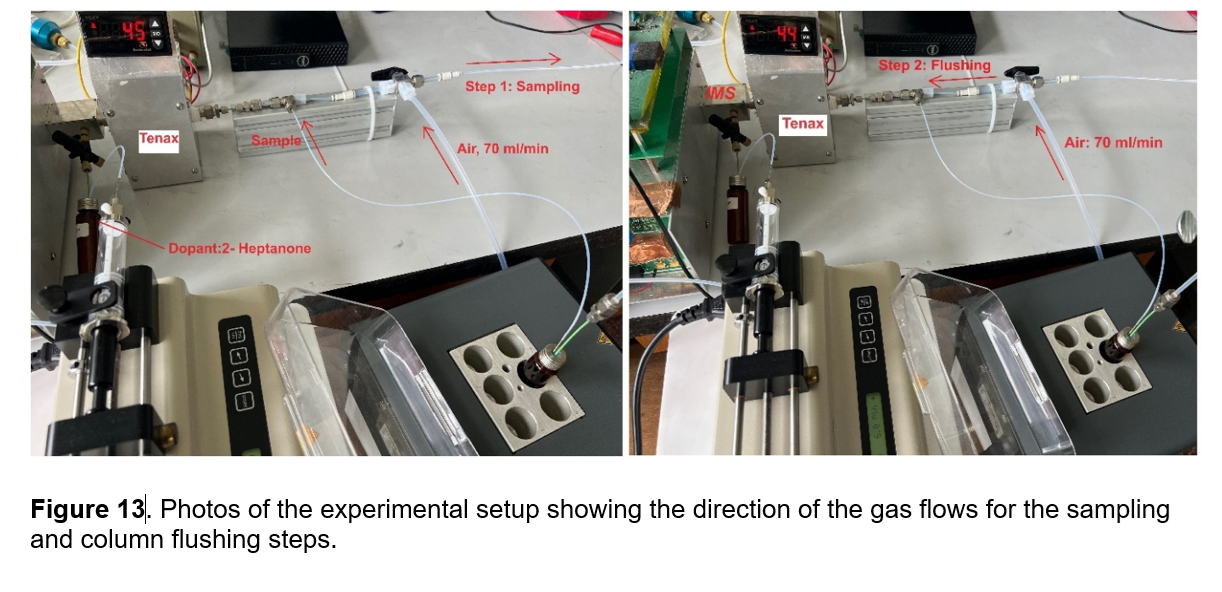
Alcohols are another class of VOCs emitted by plants and fruits. We developed an IMS-based method for detecting methanol in both the gas phase and solution. The major challenge for detection of methanol by IMS is overlapping of the methanol and the reactant ion peaks (H+.(H2O)n+) in standard IMS ionisation method. To resolve the overlap between reactant ions and the methanol peak, a dopant-assisted ionization approach was employed. Six different ketone dopants were evaluated, with 2-heptanone selected as the optimal variant. The photos of the experimental setup for headspace sampling (step 1) and flushing the column (step 2) is shown in Figure 13. This work was published in the journal of Analytical Chemistry, 2025.
-
Analysis of Formaldehyde by Corona Discharge-Ion Mobility Spectrometry
https://doi.org/10.3390/chemosensors14050105
Formaldehyde is a small, reactive volatile organic compound generated in plants through several metabolic pathways, including cell‑wall remodeling, photorespiration, and methanol oxidation. Its emission typically increases under stress conditions, such as mechanical injury, pathogen attack, or oxidative imbalance, making it a useful biomarker of plant stress physiology. Because formaldehyde reflects both metabolic activity and stress‑induced signaling, its detection provides valuable insight into plant health, environmental responses, and VOC‑mediated communication. Monitoring formaldehyde is therefore important for understanding how plants react to biotic and abiotic challenges and for developing accurate profiles of stress‑related VOC emissions.
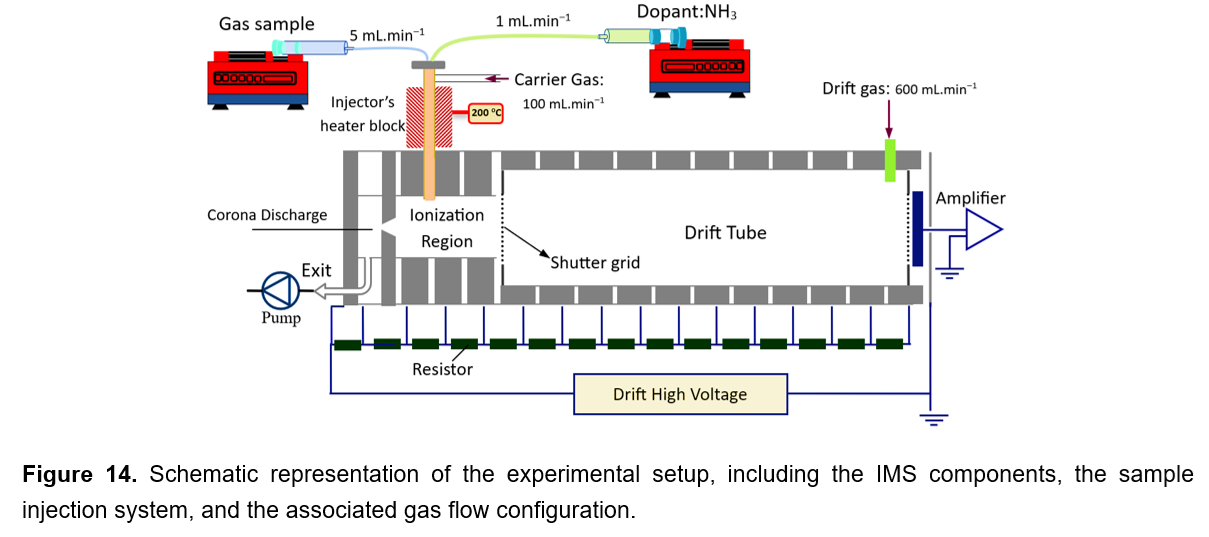
However, formaldehyde’s low proton affinity and high ionization energy, combined with interference from humidity and other VOCs, hinder its detection using conventional IMS protonation chemistry. To address the ionization challenges associated with formaldehyde derivatives, we introduce ammonia as a dopant to shift the ionization pathway from protonation to ammonium-ion attachment. In IMS, a dopant is added to the ion source to convert the standard reactant ion, H3O+, into an alternative reactant ion, thereby modifying and optimizing the ionization mechanism for analytes with challenging protonation behaviour.
Figure 14 presents a schematic overview of the experimental setup, including the ion mobility spectrometer (IMS), sample introduction system, and gas flow configuration.This work was published in the journal of Chemosensors in 2026.
-
Rapid determination of Free Nicotine Content in Tobacco Plant Tissues by Ion Mobility Spectrometry
Nicotine is a specialized alkaloid produced by certain plants as part of their chemical defense system, functioning primarily to deter herbivores and pests. Measuring nicotine is important because its concentration reflects underlying metabolic activity, stress responses, and the regulation of alkaloid biosynthesis. In tobacco, nicotine holds particular significance: it is the dominant defensive compound synthesized in the roots and transported to the leaves, where it provides protection against insects and pathogens. Quantifying nicotine in tobacco plants is therefore essential for understanding plant defense mechanisms, evaluating environmental or genetic influences on alkaloid production, and ensuring consistency in agricultural, industrial, and regulatory contexts where nicotine content directly shapes product quality and processing characteristics.
In this work, we quantified nicotine in different parts of the tobacco plant using a low‑extraction‑time protocol. Nicotine content in tobacco leaves was measured using a maceration‑based extraction procedure. Leaves of different sizes—corresponding to the top, middle, and bottom positions on the tobacco plant (figure 15)—were harvested, dried in an oven at 55 °C for 5 hours, ground into a fine powder, and stored at –20 °C until analysis.
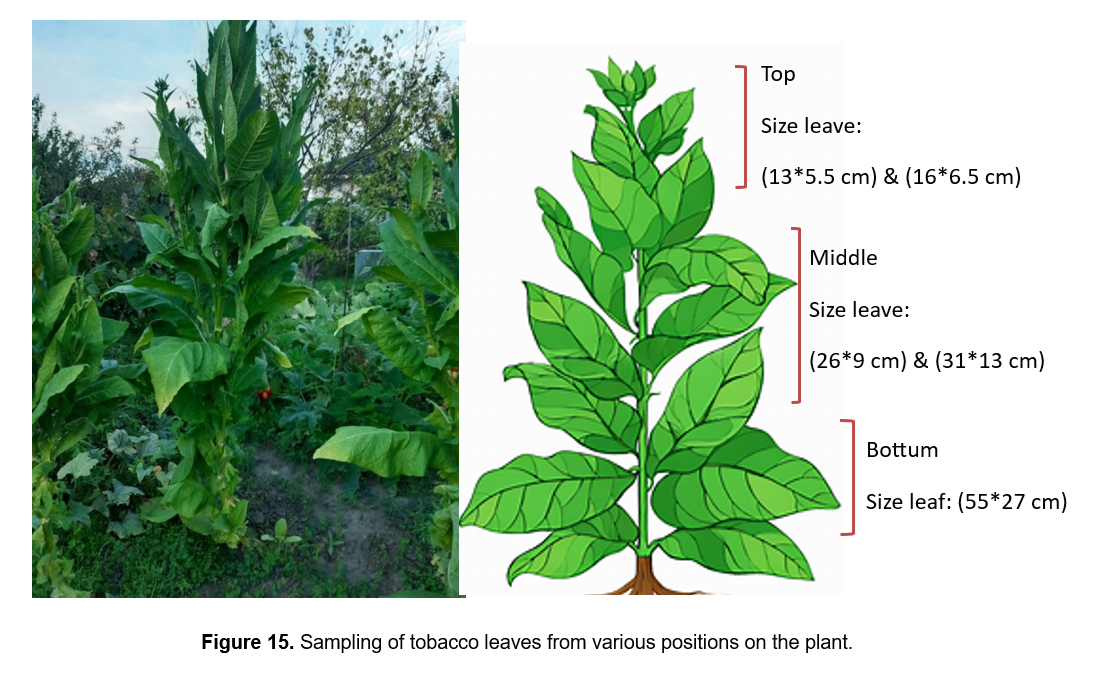
The nicotine concentrations were determined in leaves of different sizes. The measured nicotine content increased consistently with leaf size. These results demonstrate that, nicotine accumulation increases with leaf size. This pattern indicates that the lower, fully developed leaves—characterized by their larger size—contain higher nicotine levels than the smaller upper leaves. Although nicotine is synthesized in the roots and transported upward, our data show that the lower, more mature leaves serve as the main reservoir of nicotine in this plant. Most studies agree that nicotine levels vary with leaf maturity, position, and size, and your observation — larger lower leaves containing more nicotine than smaller upper leaves — fits well within documented physiological patterns.